Call (403) 836-6506Get a Free Quote
Services / Masonry

Masonry Repair Calgary

Masonry, Brick & Stone Repair in Calgary

Brick and stone repairs, mortar joint renewal, stone veneer installation and masonry restoration. We assess the existing work and discuss an appropriate repair scope before preparing an estimate.

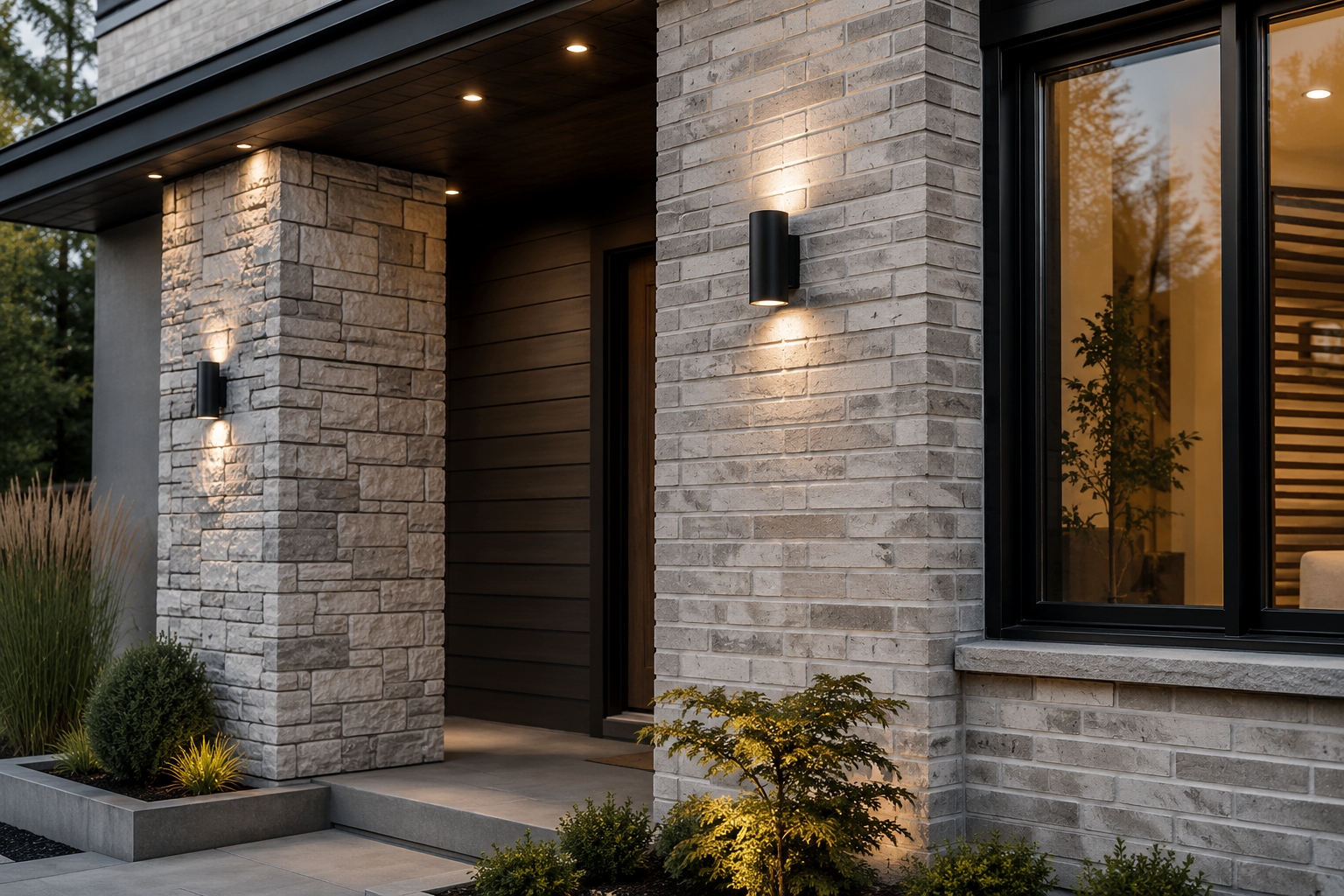
Brick and stone masonry on an exterior wall

Masonry services in Calgary

Repair the masonry and understand the conditions around it.

Open joints, crumbling or recessed mortar, cracked or spalled brick, and loose or displaced stone can indicate deterioration. Before choosing a localized repair or broader restoration, the affected area and adjacent construction should be reviewed, including signs of moisture and recurring damage.

Brick and stone repair

Repair options depend on whether damage is limited to an individual unit or extends into surrounding joints or wall areas. Loose, cracked, chipped or spalled units are assessed with adjacent masonry before a repair scope is selected.

Mortar joint repair and replacement

Repointing renews deteriorated mortar joints: unsound mortar is removed to a suitable depth and new mortar is placed and tooled to suit the existing work. Mortar selection must consider the masonry units and original assembly, not colour alone.

Stone veneer installation

Stone veneer installation depends on a suitable, prepared backing and the veneer system’s installation requirements. Clearances, moisture management, mortar selection and detailing are part of planning; the selected manufacturer’s instructions guide the assembly.

Masonry restoration and maintenance

Restoration may combine unit replacement, joint renewal and repair of related exterior details. Addressing water entry or other contributing conditions is important where deterioration has recurred.

Assessment and repair process

Plan a repair around the existing masonry.

Repair work generally starts by reviewing the affected units, mortar joints, access and related exterior details. The scope may include protecting nearby surfaces, removing unsound mortar or damaged units, cleaning and preparing the repair area, placing compatible replacement material, and finishing the joints or surface to suit the agreed work. The amount of removal depends on the condition found.

Replacement brick, stone and mortar are selected for compatibility with the existing assembly as well as appearance. Colour, texture and joint-profile matching can be realistic goals, though weathering and material availability mean a perfect match cannot be guaranteed. Where moisture entry appears to contribute to deterioration, that condition should be investigated and addressed as part of planning.

Estimate factors include access, height, affected area, removal and preparation, material availability, existing condition, and related detailing. Surface repairs do not resolve structural movement; visible signs of movement may need separate assessment.

Masonry FAQs

Common questions about masonry repair.

Practical guidance on repair choices, mortar joints and planning the work.

When can damaged masonry be repaired instead of replaced?

Localized repair may suit isolated damaged units or deteriorated joints when the surrounding masonry remains sound and stable. Wider deterioration, repeated failures or damage across connected areas may call for a broader restoration scope. An assessment helps distinguish the options; surface repair alone does not correct structural movement.

What is repointing?

Repointing is the renewal of deteriorated mortar joints. The unsound joint mortar is carefully removed, the joint is prepared, and compatible new mortar is placed and finished. Decorative tuckpointing is a distinct finish technique and is not another name for every repointing repair.

Can replacement brick, stone and mortar match?

A close visual match may be possible, but an exact match cannot be promised. Size, face texture, colour, weathering and current material availability affect unit selection. Mortar colour, aggregate, joint profile, tooling and age also affect how a repair blends, so samples or test areas can help set expectations.

Why might damage or cracking return?

Recurring deterioration can be related to ongoing moisture entry, freeze-thaw exposure, incompatible repair materials, movement or a detail that continues to direct water into the wall. The likely source should be investigated before repeating a surface repair. Cracks that suggest movement may need separate structural assessment.

What affects the estimate and schedule?

The estimate and schedule depend on access and working height, the affected area, the amount of removal and preparation, existing conditions, material availability and related details such as transitions or water-management repairs. Once the site and proposed scope are reviewed, the expected sequence can be discussed.

When might a separate structural assessment be needed?

A separate assessment may be appropriate for cracks that are wide, changing, diagonal or stepped through units, displaced or bulging masonry, separation around openings, or signs of ongoing movement. A masonry surface repair does not diagnose or correct structural movement; consult a qualified structural professional where those signs are present.

Masonry repair estimate

Tell us what you are seeing.

Share the affected area, any loose or damaged units, and whether the issue has returned after previous repairs. We can discuss the next assessment step and prepare an estimate for the proposed masonry work.

Contact LEL Construction

Call or email us to discuss your project.

Service Area
Calgary and surrounding communities
Hours
Mon–Fri: 7am–6pm
Sat: 8am–4pm
Call NowGet a Quote